
Tea Packaging Pouches
Aroma-locking 3-layer MET PET pouches for black, green, masala chai, and single-estate tea.
Custom flexible packaging for tea brands — 3-layer PET + MET PET + LDPE laminated pouches and rolls in 50 g to 1 kg sizes, with stand-up zipper, center-seal, and FFS-roll formats, printed in your brand colours on rotogravure.
Common pack sizes
Key features
- 3-layer aroma & light barrier
- Stand-up zipper option for premium retail
- Up to 8-color rotogravure print
- Glossy or registered matt finish
- Compatible with FFS lines and pre-made pack-out
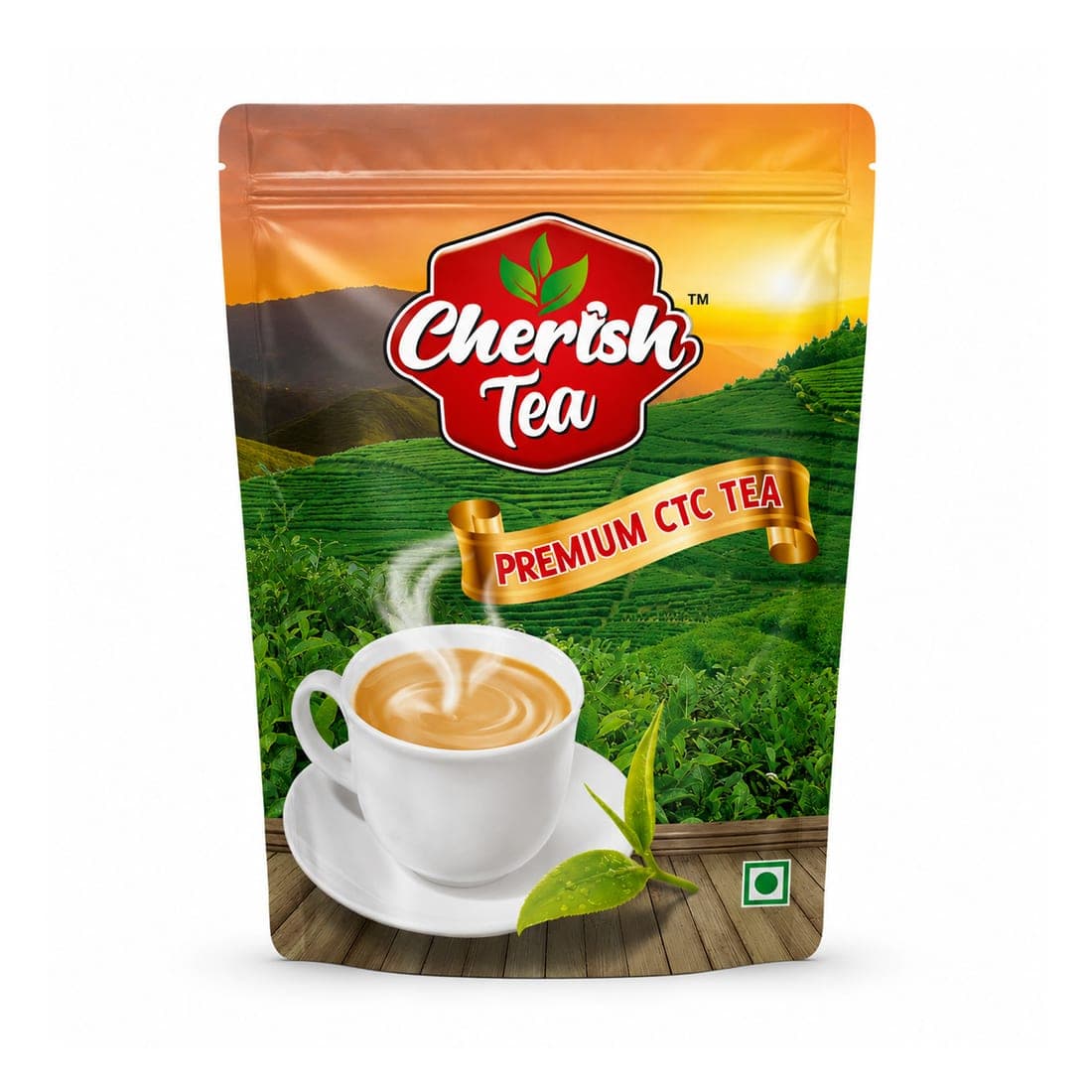
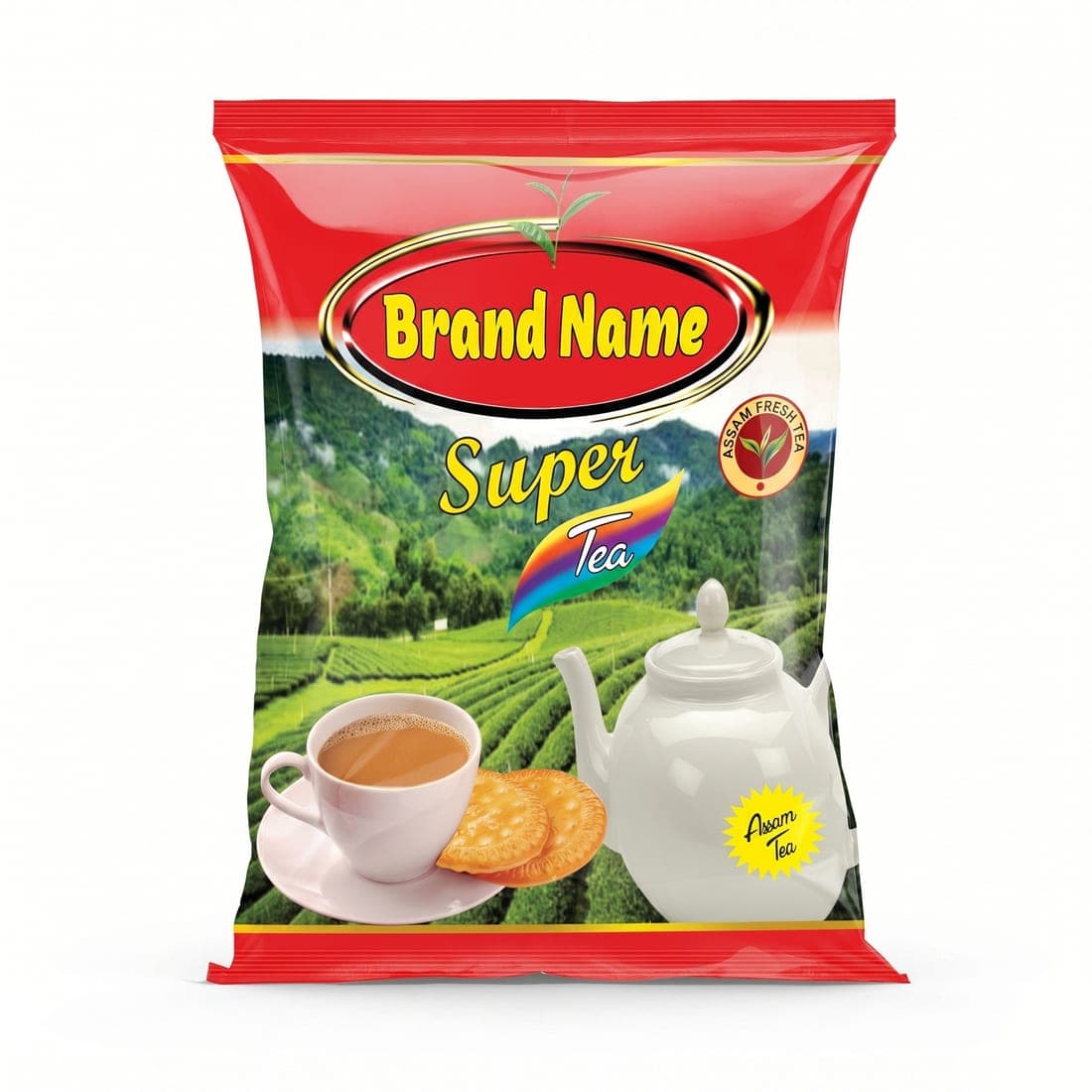
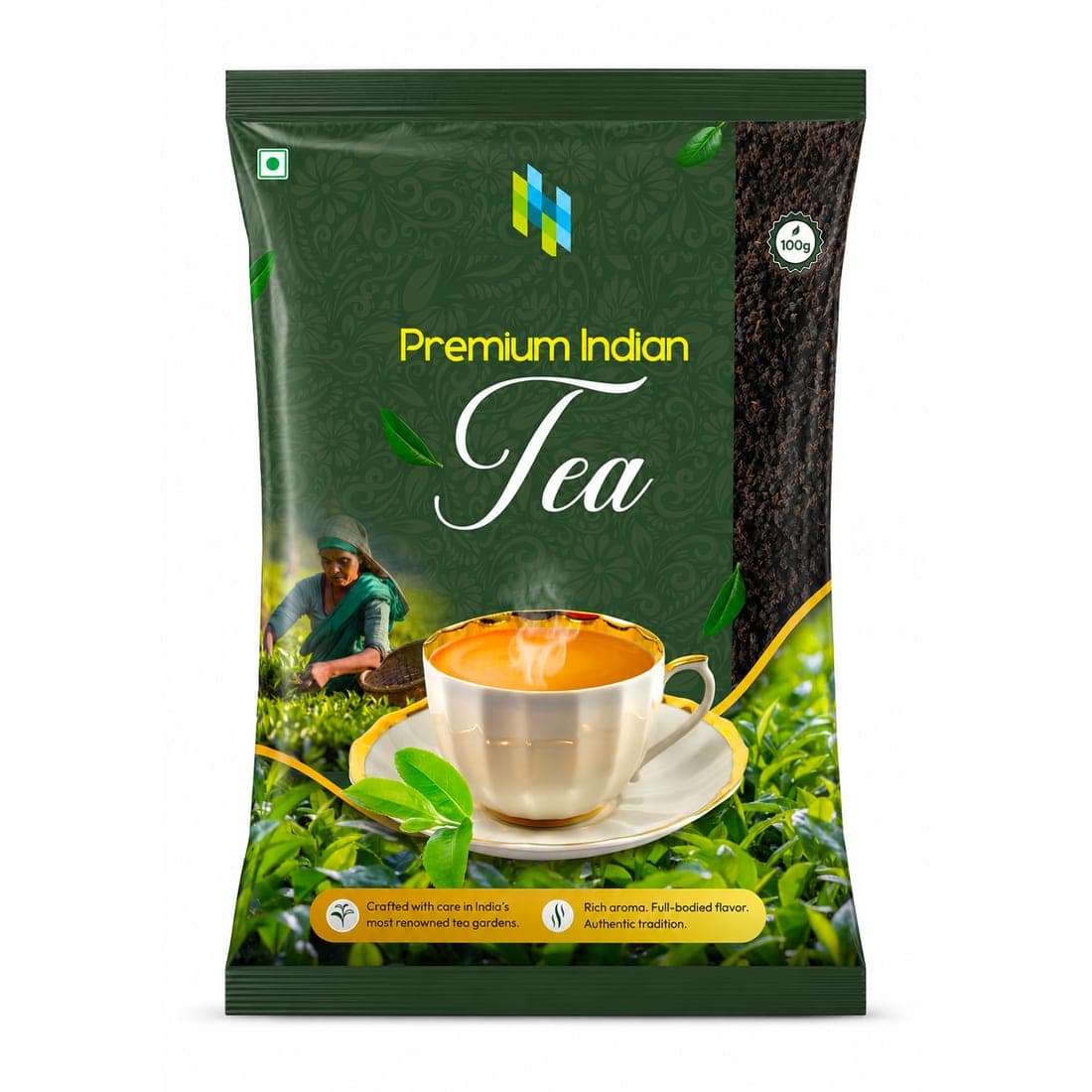
Tea is one of India's most aroma-sensitive product categories. A clean Darjeeling first flush smells like the warehouse it was stored in if the laminate is wrong. A masala chai blend goes flat in three weeks. The difference between a regional brand and a national one is, often, the pouch.
We manufacture custom-printed tea packaging pouches at our Madhyamgram facility — 3-layer aluminium laminated pouches, stand-up zipper formats, center-seal pouches, and laminated FFS rolls — in pack sizes from 50 g samples to 1 kg HoReCa packs. Printed in your brand colours on rotogravure, up to 8 colours in a single pass.
A buyer's guide that goes deeper on the tradeoffs is on our [tea packaging pouches: materials & sizes guide](/blog/tea-packaging-pouches-guide).
Common sizes we manufacture
Tea is unusual in having more pack-size variety than most dry-goods categories — from sampler sachets to bulk hotel packs. The five sizes Indian retail expects:
50 g samples
Often free with a 250 g purchase, or sold in mixed-grade gift packs. Margin is low; print quality is what justifies the cost. A pre-made center-seal pouch on a 3-layer laminate works well at this size.
100 g entry SKU
The entry size for new customers and online retail. Most major tea brands lead with this size. A pre-made center-seal pouch with a tear-notch, or a stand-up zipper for modern retail, is the standard.
250 g household
The workhorse SKU. Refill-friendly. Often sold in cartons of 12 to kirana stores. Stand-up zipper pouch in a glossy or matte finish is the default modern-trade format.
500 g family
For households that drink tea daily. Same format as 250 g, scaled up. Sometimes shipped in a secondary tin or pouch-in-carton for premium positioning.
1 kg bulk and HoReCa
For hotels, restaurants, offices, and bulk retail. Less retail-facing. Often a flat center-seal pouch with simple print. Stand-up zipper matters less here since the buyer transfers tea to a canister at point of use.
Why 3-layer MET PET is the tea industry default
Quality-conscious tea blenders converge on one laminate structure: PET + MET PET + LDPE. Three layers, each doing a specific job.
- PET (outer). The print substrate. Holds rotogravure cleanly. Resists abrasion from shop shelves and transit.
- MET PET (middle). Metallised polyester. The barrier layer. Reflects UV and visible light. Stops oxygen transmission at a rate far better than clear films. This is the layer that locks aroma in.
- LDPE (inner). Heat-seal layer. Reliable sealing temperature window for both pre-made pouches and FFS lines. Food-safe contact surface.
Some premium brands step up to PET + Aluminium foil + LDPE — actual aluminium foil instead of metallised film. Foil is denser and a better barrier, but it is more brittle (cracks under flex during transit) and costs more per pouch. For most Indian tea SKUs at retail price points, MET PET is the sweet spot.
Pouch formats — when each makes sense
Center-seal pouch
The workhorse format for tea. Sealed at the back along a fin, open at the top for filling. Used across the full size range — 50 g samples, 100 g and 250 g entry SKUs, and 1 kg HoReCa packs.
Stand-up zipper pouch
The premium retail format. Stands on the shelf, recloses after use, holds shape when half-empty. Standard for 100–500 g premium retail tea. MOQ for stand-up zipper pouches is 500 kg per design versus 300 kg for flat formats.
MET PET laminated FFS roll
For tea brands running an in-house Form-Fill-Seal line. We supply [MET PET laminated rolls](/products/aluminium-laminated-roll) slit to your machine's web width in the right inside-layer LDPE grade. Lower per-pouch cost, faster line speed, higher upfront setup. Established tea brands typically graduate to FFS rolls at higher monthly volumes.
Print: how rotogravure changes tea brand perception
Tea is one of the most print-sensitive categories. A premium Darjeeling printed cleanly in rotogravure with a registered matt or gloss finish looks like a heritage brand; the same artwork printed flat in four-colour process looks generic.
Print elements that justify the extra colours and finishes for premium tea:
- A spot brand colour alongside CMYK + White
- Gradient leaf illustrations that need additional process colours
- A registered matt / gloss finish where the matt areas align precisely with the artwork
Rotogravure handles all of this on the same line. We can quote a single-colour generic tea pouch or a multi-colour premium pack on the same MOQ — only the cylinder count changes.
MOQ and lead time
- Laminated rolls (for FFS or pouch conversion) — 300 kg per SKU per design.
- Pre-made center-seal pouches — 300 kg per SKU per design.
- Stand-up zipper pouches — 500 kg per SKU per design.
- First-run lead time: 20–30 working days from artwork sign-off (most of this is cylinder engraving).
- Repeat order lead time: 10–15 working days because cylinders are ready with us.
Indicative only — the formal MOQ and lead time for your order are stated in the quotation we issue.
Why brands choose us
- One roof. Printing, lamination, slitting, and pouching all in-house at our Madhyamgram facility — tighter QC and faster turnaround than a multi-vendor chain.
- Up to 8-colour rotogravure for sharp brand graphics — spot colours, gradients, and registered matt finishes in a single pass.
- Format flexibility. Center-seal, stand-up zipper, and FFS rolls all from the same facility — switch formats between SKUs without changing suppliers.
- Trusted by tea blenders and brand owners across East and North India.
Recommended products for this application
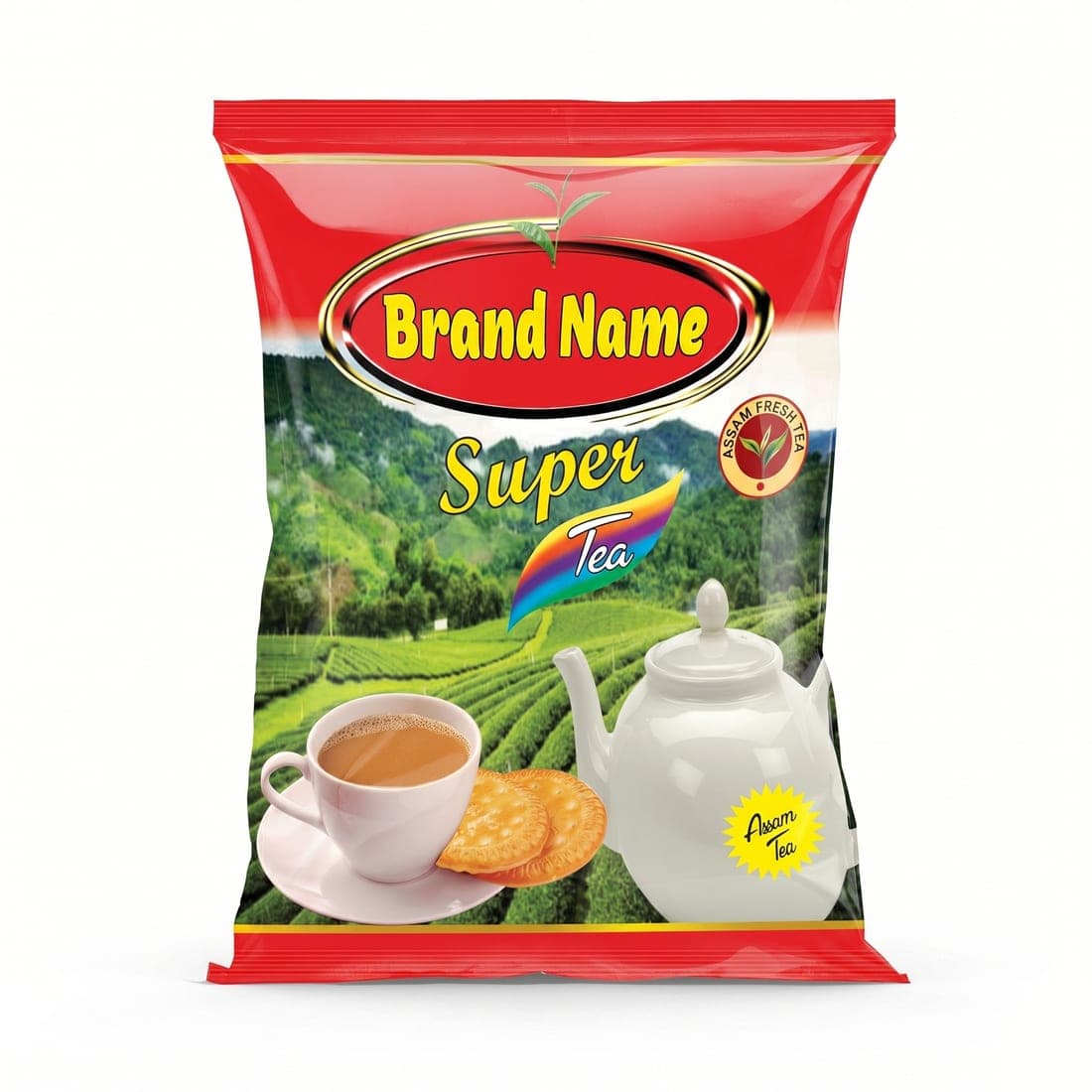
Aluminium Laminated Roll
Premium glossy 3-layer laminated rolls with MET PET barrier for tea, namkeen, masala, and aroma-sensitive SKUs.
View specs →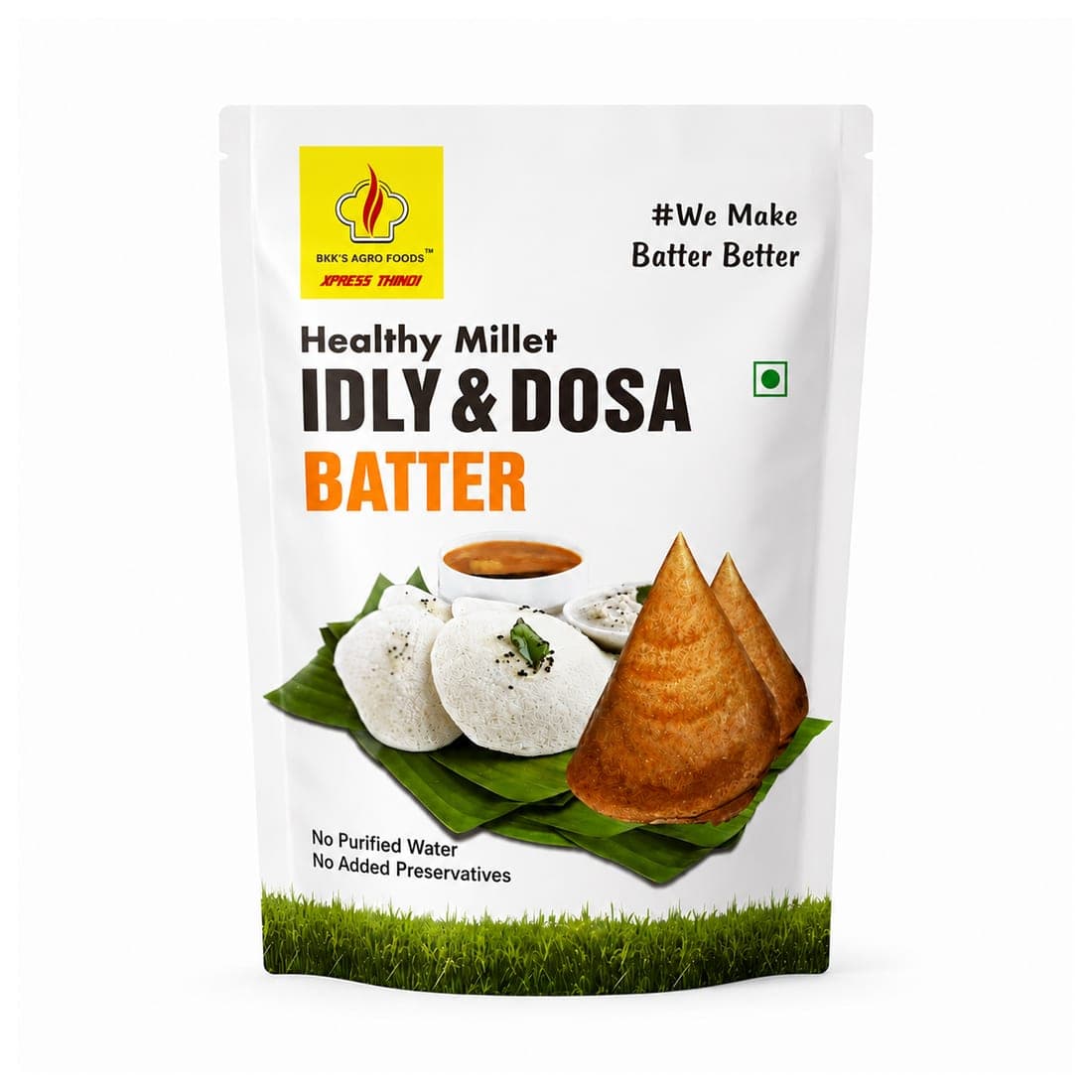
Stand Up Pouch
Premium shelf-ready pouches that stand on their own — with or without zipper.
View specs →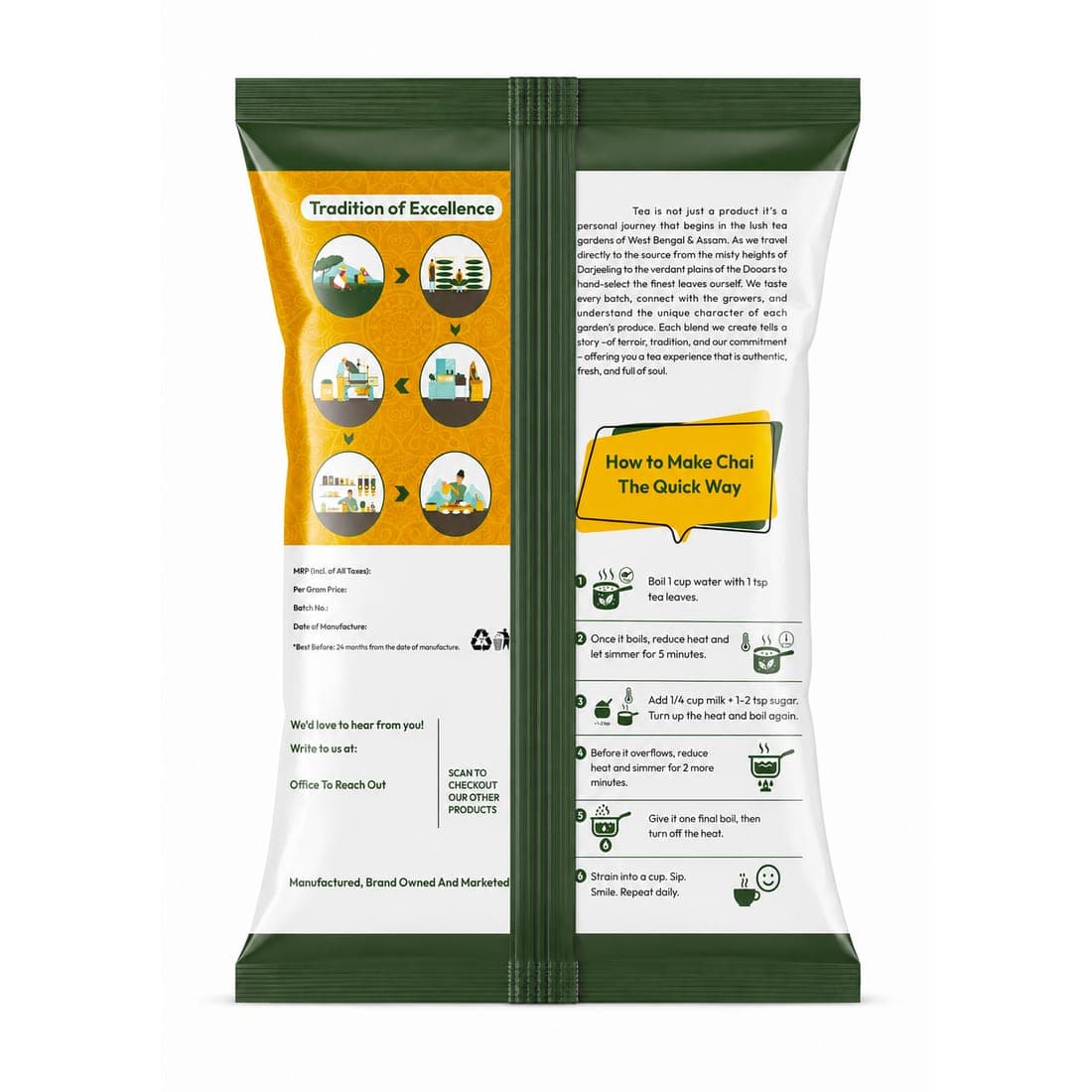
Center Seal Pouch / Roll
Center-seal (back-seal) format — pre-made pouches for hand-fill, or laminated rolls for FFS lines.
View specs →Discuss your tea pouch project
Our team will get back to you with a competitive quote.
Cost Calculator
Get a fast estimate for your custom packaging — cylinder cost, pieces-per-Kg in one place.
Cylinder Cost Estimator
Per-cylinder cost finder for any pouch size.
Pieces Per Kg Finder
Pouch weight calculator and pieces-per-Kg lookup.
Estimates only — final pricing confirmed in your quotation.
FAQ
What is the MOQ for a tea packaging pouch order?+
For laminated rolls and pre-made center-seal pouches, MOQ is 300 kg of laminated film per design. For stand-up zipper pouches, MOQ is 500 kg per design — the heavier laminate spec and zipper conversion need a longer run for the setup to amortise correctly. The formal MOQ for your order is stated in our quotation.
Why a 3-layer MET PET laminate for tea?+
Tea aroma is a mix of dozens of volatile organic compounds that diffuse through ordinary plastic film within weeks. A 3-layer PET + MET PET + LDPE laminate is designed as a barrier against aroma loss, oxygen ingress, UV, and moisture. Real-world shelf life still depends on filling moisture, handling, transit, and storage at the destination.
When does a tea pouch need a stand-up zipper?+
Stand-up zipper makes commercial sense from 100 g upward in modern retail — customers reclose between uses and the pouch holds its shape on the kitchen shelf. For 50 g samples or 1 kg HoReCa packs the zipper rarely pays back; a flat center-seal pouch is more economical.
Can you produce both pre-made pouches and FFS rolls?+
Yes. Pre-made center-seal and stand-up zipper pouches are supplied for hand-fill, semi-auto, and slow-line operations. Laminated FFS rolls are slit to your machine's web width with the right inside-layer LDPE grade (Natural or N/F) for your sealing jaws — used by established tea brands at higher monthly volumes.
Is aluminium foil better than MET PET for premium tea?+
Aluminium foil is a denser barrier than metallised PET, but it is more brittle (cracks under flex during transit) and costs more per pouch. For most Indian tea SKUs at retail price points, 3-layer PET + MET PET + LDPE hits the right barrier-cost-flex balance. We can quote PET + Aluminium + LDPE for export or super-premium SKUs.
What is the lead time on a first tea packaging order?+
Typical first-run lead time is 20–30 working days from artwork sign-off — most of that is cylinder engraving. Repeat orders take 10–15 working days because the cylinders are ready with us. The formal lead time is stated in the quotation we issue.
More applications
View all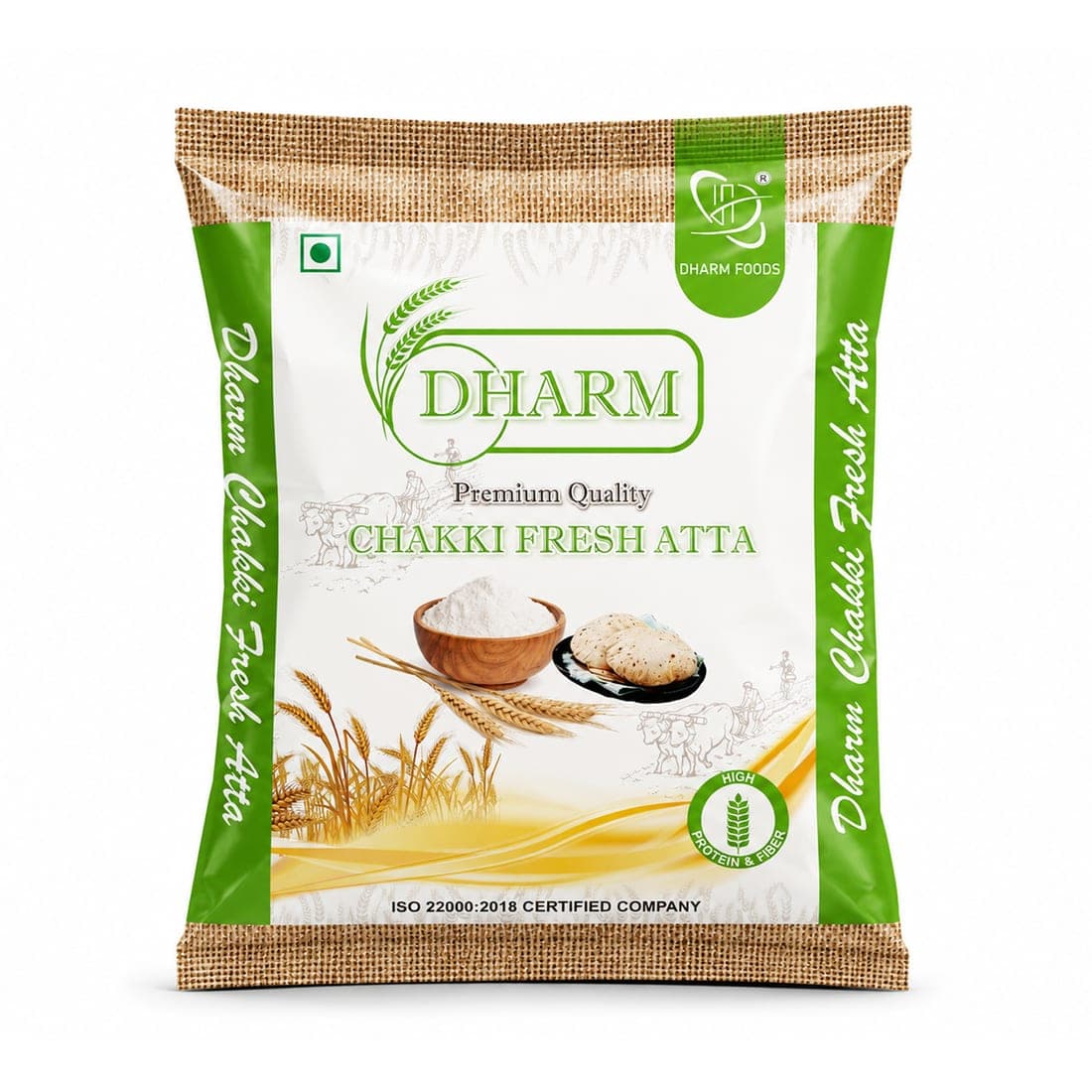
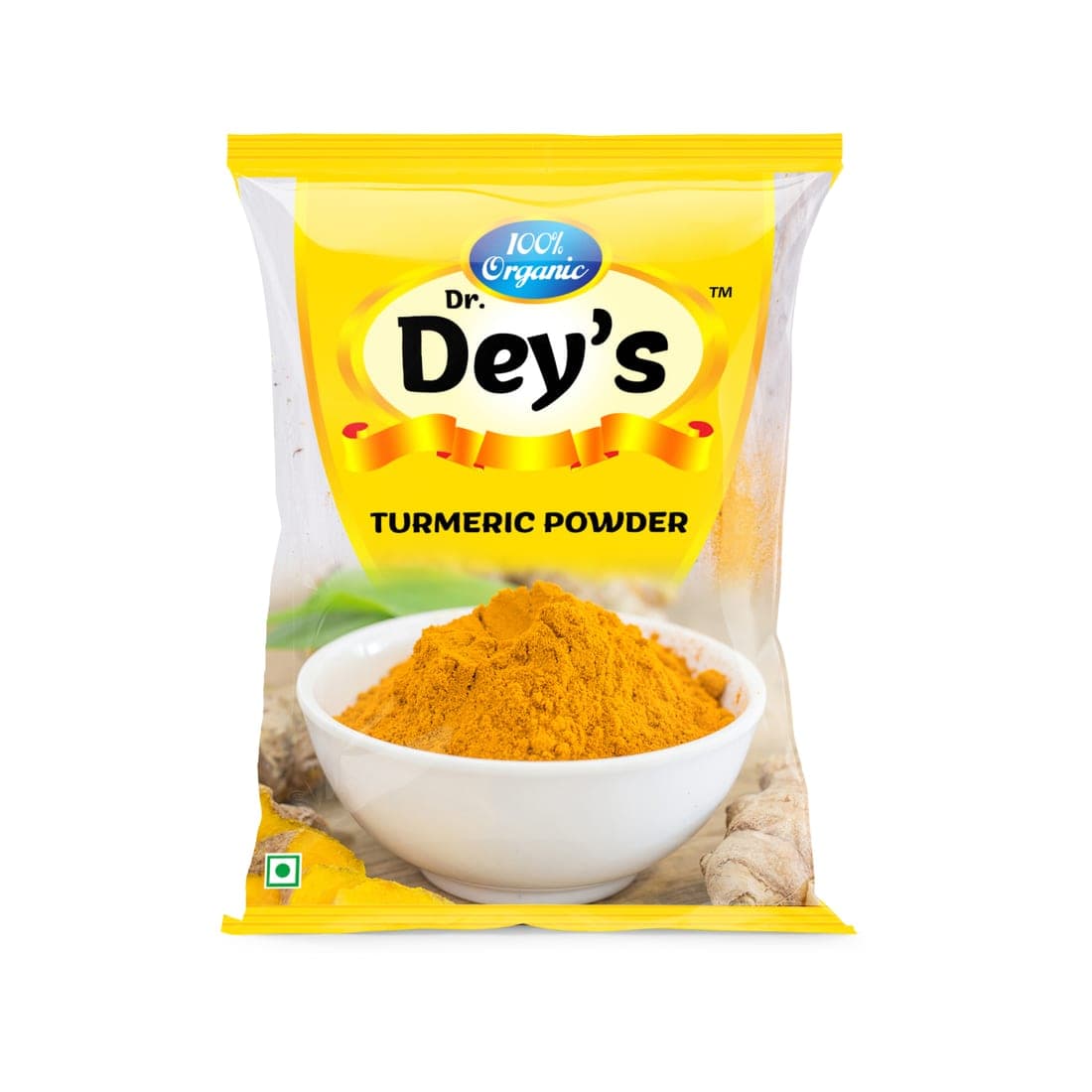
Atta Pouch
Strong moisture-barrier pouches for 1 kg, 5 kg, and 10 kg flour packs.
Masala Pouch
Aroma-locking 3-layer pouches for ground masala, spice blends, and chaat / garam / sambar masala.
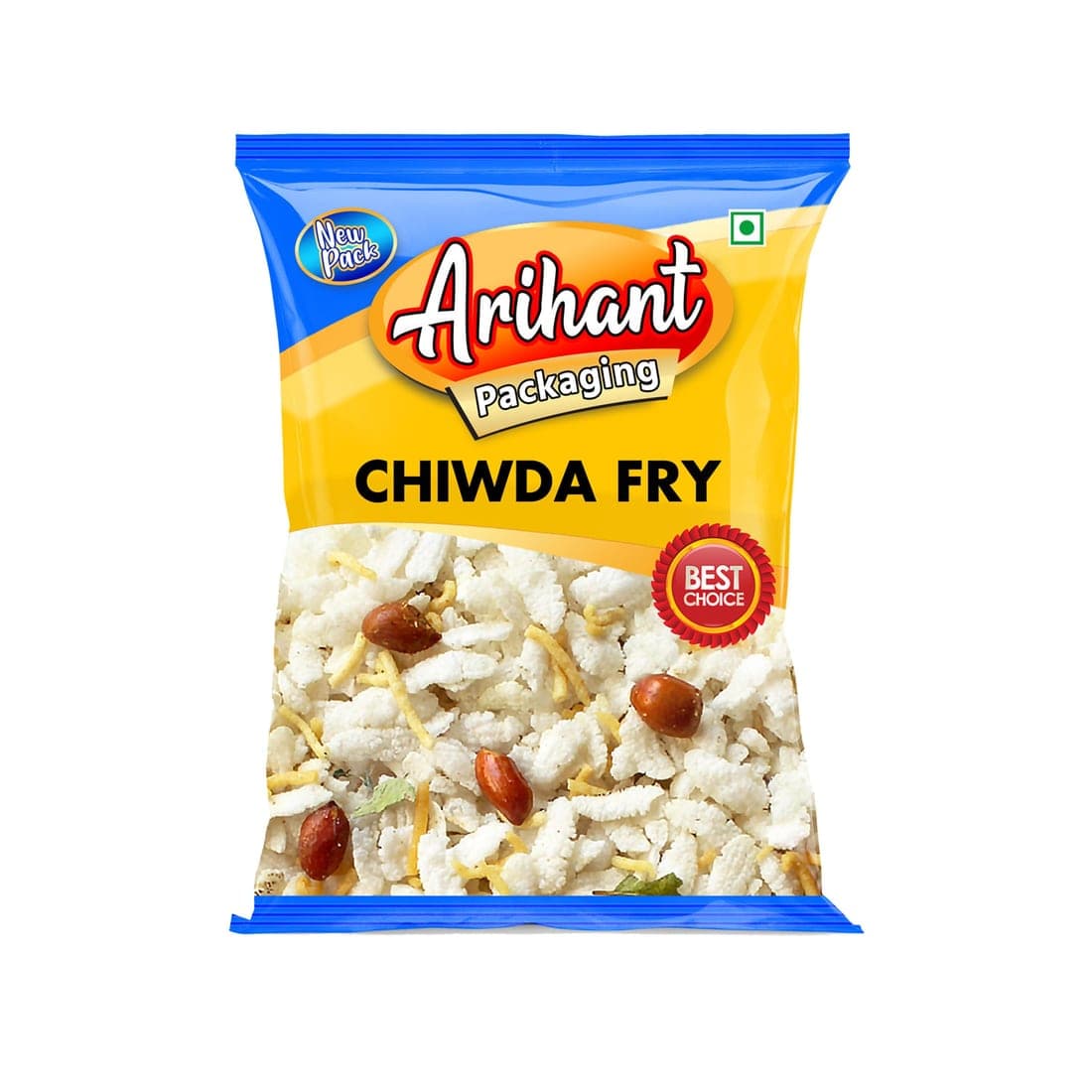
Chira Pouch
Window-front pouches that show off flattened rice grain quality.
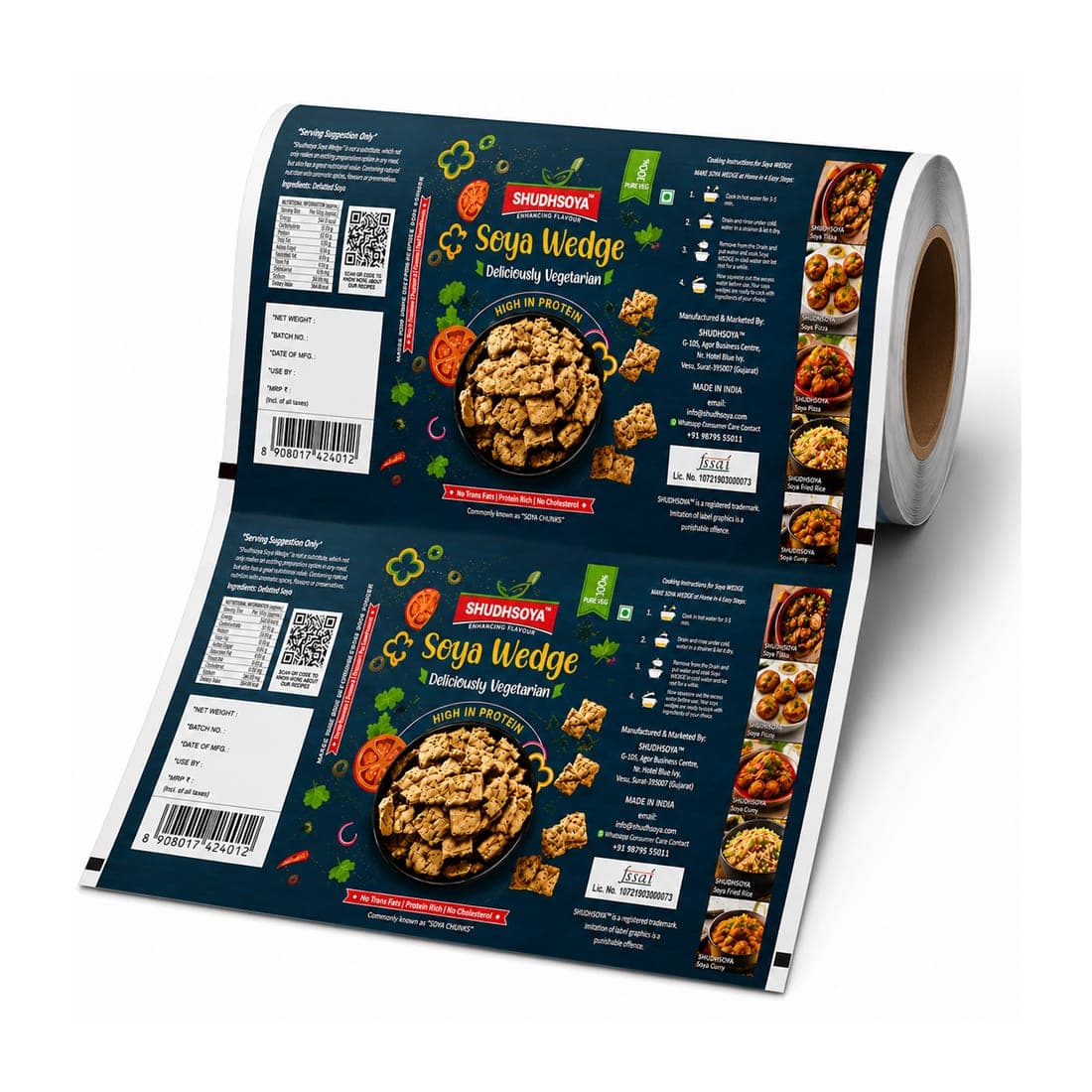
Soya Bari Pouch
Bulk-strength pouches for soya chunks and bari packs.